|
1
|
|
|
2
|
|
|
3
|
|
|
4
|
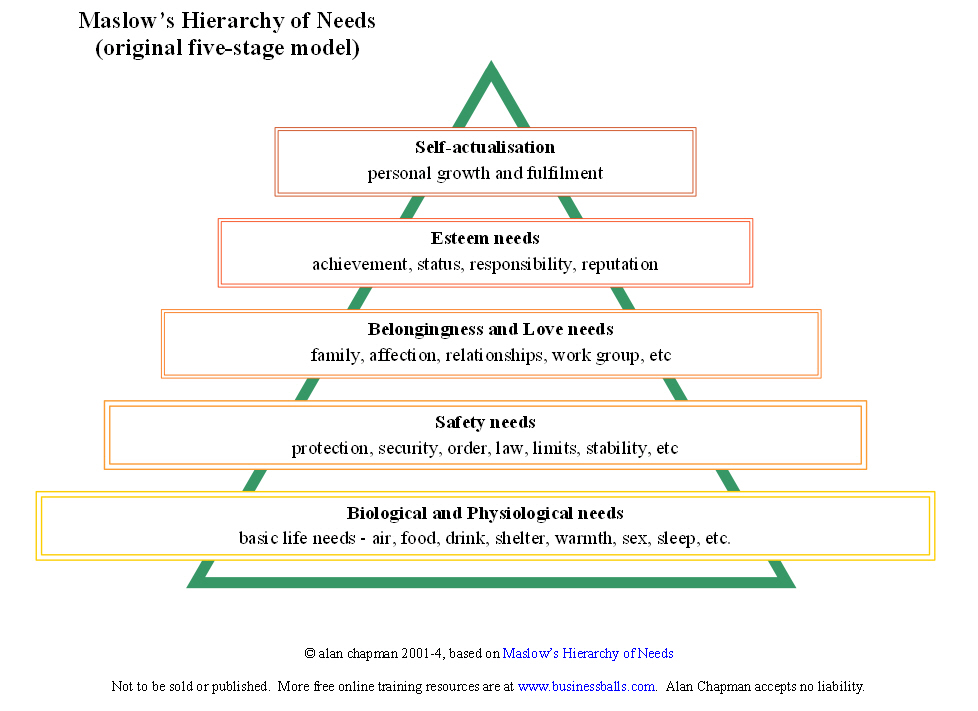
- Evolution of man from a social being to a professional being:
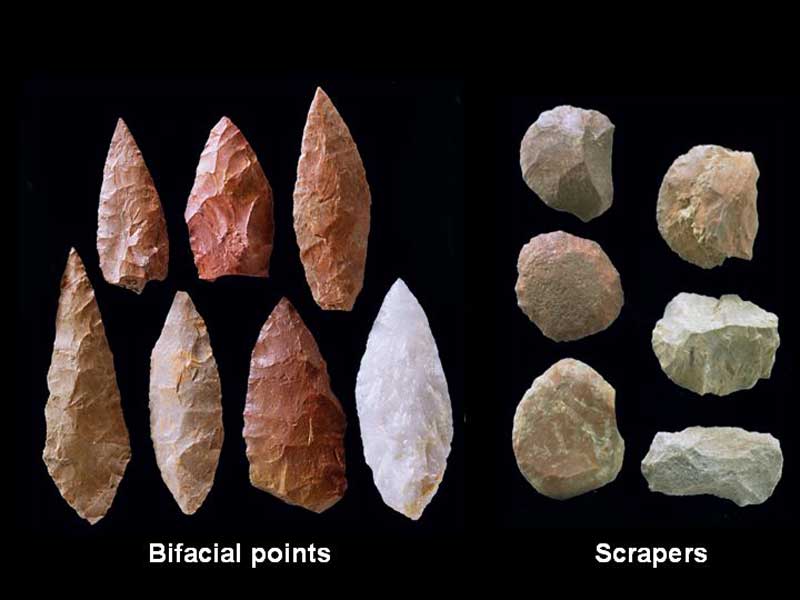
- The Stone Age: physiological needs
- The Bronze, Copper and Iron age humans showed signs of cultural
advancement – moved up the ladder to meet safety and social needs
- Industrial Revolution: growth of trade, rise of capitalism, complexity
of industrialization processes, more and more complex division of labour
(specialization) – concentration of human needs moved up one more step
to esteem (ego) needs.
- 21st century:
- Technology driven
- globalisation,
- Standardisation and benchmarking
|
|
5
|
- Professional Development Skills:
- Contemporary demands and challenges
- Person Vs Ecosystem
- Define
- Measure
- Analyse
- Improve
- Control
- (The essence of six sigma)
|
|
6
|
- Communications in today's work environment
- Interpersonal styles and relationship building
- Resolving conflicts
- Working in a global business environment
- Managing projects and multiple priorities
- Solving problems and ethical decision making
- Contemporary technology usage
|
|
7
|
- Individuals:
- A set of four ubiquitous and universal attributes of global managerial
acumen and leadership can be identified as essential – curiosity,
perspective, character and savvy.
- Attributes propelled by specific
dynamics –
- Country affiliation
- Industry affiliation
- Company affiliation
- Functional responsibility
- Attributes propelled by globalisation
- Competent, interested in international business
- Continuous updating of the frontiers of knowledge and understanding
- People skills – gregarious, socially intelligent
- Keep abreast of changing regulatory norms, accounting standards
|
|
8
|
- Corporations:
- Professional skills development norms-
- Continuely invest in high quality training and development schemes
- Recruit individuals from the industry who can bring their commercial
expertise.
- A corporate should follow a regime with the purpose:
- To define the competence standards which firms should achieve;
- To ensure staff have – and continue to have – the knowledge and skills
necessary to carry out their roles; and
- To ensure that consumers are appropriately protected and have
confidence in the firms which they deal with.
- Organisations should also ensure that:
- Employees are competent for their roles;
- Employees remain competent for their roles;
- Employees are appropriately supervised;
- Employees’ competence are regularly reviewed;
- The level of competence is appropriate to the nature of the business;
and
- The obligation to society is fulfilled with an appropriate CSR
program.
|
|
9
|
- The State:
- Facilitate education and employment
- Ensure that the country is well placed to realize business strategy
through people
- Support organisations in developing and implementing plans to enhance
the professional skills of their current and future employee pool
- Current Positioning-
- With over 5,20,000 employees, India is the 2nd largest
employer in IT software and services industry alone
- Huge pool of English speaking and computer literate workforce
- There are 247 University level Institutions with 11600 colleges
enrolling over 8 million students
|
|
10
|
- Defining Capacity Building:
- “The process of developing and strengthening the skills, instincts,
abilities, processes and resources that organizations and communities
need to survive, adapt, and thrive in the fast-changing world."
- Capacity Building is much more than training and includes the following-
- Human resource development
- Organizational development
- Institutional and legal framework development
|
|
11
|
- The capacity building concept should ensure the development of a system
that offers the following:
- Creation of digital products
- Control & management of product information & product
- Cross-functional collaboration & Integration
- Scalability/Flexibility
- Operational Transparency
- End-to-End and Real-Time Visibility
- Ease-of-Use and User Empowerment
- Analytics
|
|
12
|
- Why is Capacity Building Needed ?
- The issue of capacity is critical and the scale of need is enormous, but
appreciation of the problem is low.
- The link between needs and supply is weak.
- There is a lack of realistic funding.
- There is need for support for change.
- Training institutions are isolated - communications are poor.
- Development of teaching materials is inefficient.
- Alternative ways of capacity building are not adequately recognized.
|
|
13
|
- Individuals:
- Acquire the necessary skill sets
- Ensure that work takes place in a congenial environment leading to
higher productivity and efficiency (also a resultant of optimum
utilisation of capacity)
- Learn to build sustainable businesses and sustain peak performance
- Nurture a culture of innovation
- Foresight, strategic clarity and organisational capability
|
|
14
|
- Corporations/Industry:
- The future of various industires hinges on the performance of
respective companies and their management’s ability to buck the trend by
:
- ( Mentoring ‘thought to reality cycle’ (concept ® incubate ® perfect
- research & prove efficacy ® regulatory approvals ® commercialize
- technology)
|
|
15
|
- Corporations/ Industry:
- - Grow organically and/or inorganically
- - Keeping an eye on the competition
- - Anticipating changes in the market place
- - Cutting wastage - Honking on cost savings & consolidating network
- spending
- - Putting in place a total cost of ownership strategy
- - Improving value added output and moving up the value chain
- - Promoting advancement of research and teeing up revolutionary ideas
- - Retaining customers
- - Networking relationship as a means of accessing new
- technologies (alliances,
partnerships, etc.)
- - Striking a balance between irrational exuberance and irrational
- pessimism
|
|
16
|
- Corporations/Industry:
- - Expanding coverage through new products and vertical
- geographies (global
harmonization)
- - Generating and supporting aggressive growth strategies
- - Increasing the range of quality of acquisition targets
- - Learning from the success and failures of others
- - Implementing the latest management tools and reinforce
- your distinctive strategy or
differentiation from competition
- - Focussing on quality vs quantity
- - Using technologies which allow to collaborate with
- customers, employees, business
partners and all other
- stakeholders
- - Actively creating a shared purpose for all stakeholders
- - Mass customizing with agility and scalability across
- industry segments
|
|
17
|
- The State:
- Facilitate supportive policies and procedures for the various industrial
sectors
- Creating a business friendly regulatory environment
- Fostering innovation and entrepreneurship in both
- academia and industry
- Facilitate education and employment
- Encourage and support advancement of R & D
- Putting in place a functional IPR/Patent regime
|
|
18
|
- Professional skills and capacity building are mutually inclusive
- Current scenario:
- The globe has no corners - In the words of Mr. Thomas Friedman, ‘the
world has flattened”
- Global convergence of regulatory frameworks
- Convergence of financial markets
- Gradual convergence of taxation policies
- Convergence of accounting standards
- Emergence of Open-sourcing; outsourcing; off-shoring; in-sourcing;
synchronizing global supply chains; combination of digital, mobile,
personal, and virtual technologies
- Resulting from the need to/of:
- Convergence of advanced technologies, new ways of doing business,
removal of economic and political obstructions, rapid introduction of
millions of young Chinese, Indian, and East European professionals into
the world economy
|
|
19
|
|
|
20
|
|

 Notes
Notes